CEE Newsletter: Climate Control: Take control of your energy demand
Climate change is a worldwide problem. A great deal of electrical energy in Europe is generated from fossil fuels, which release carbon dioxide as a by-product. Whether or not you believe these facts are related, there is always a sound economic argument for reducing the amount of energy used by your business; CEE Relays Ltd aims to help.

(Right). Old coal-fired power stations can be converted to burn wood chips in an effort to become more sustainable. CO2 emissions can also be captured to reduce their environmental impact.
What can we do as consumers to help curb emissions?
The answer is of course - consume less.
What can we do as consumers to help curb emissions?
The answer is of course - consume less.
Step Changes:
It is unlikely that your business will be able to make one single change to its processes or infrastructure that would vastly reduce the energy consumed. Instead, there are more likely to be an accumulation of small changes which add up to an overall reduction in demand.
What are the incentives?
Over the last decade, the German government has introduced policies to encourage medium- and large-scale businesses to reduce their energy demand year-on-year. Tax rebates are offered to businesses which prove they have lowered their total energy demand by a minimum percentage over the previous year. There is no exact equivalent in the UK; instead there is ESOS (Energy Savings Opportunities Scheme) under which large businesses are required to assess their energy usage every four years and to find ways to reduce it.
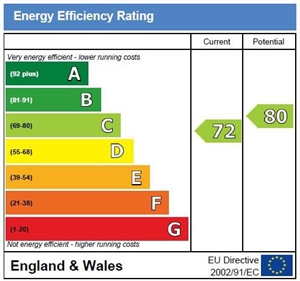
Small and medium companies are not mandated to comply with this scheme. However, forward-thinking businesses can instead seek to qualify for ISO 50001 certification. This standard, updated in 2018, is a framework to help businesses reduce their overall energy consumption; to use less fossil fuel and by doing so lower overall expenditure on energy.
To be assessed for ISO 50001 certification, your business should make contact with one of a number of accredited organisations; a directory of these is available here. Follow the link named “directory of accredited organisations”.
But we are getting ahead of ourselves. The first step in reducing or managing your energy demand is to know which equipment and processes are using energy and when. Metering will provide a measure of overall electricity demand over a given period, but it lacks detail. This is where CEE can help. Installing NPP915 power monitor relays on your network will allow you to take real-time energy measurements and share them with a SCADA (Supervisory Control And Data Acquisition) system. Keep track of which electrical equipment is using energy and how it changes over the course of a year or over the production cycle.
To be assessed for ISO 50001 certification, your business should make contact with one of a number of accredited organisations; a directory of these is available here. Follow the link named “directory of accredited organisations”.
But we are getting ahead of ourselves. The first step in reducing or managing your energy demand is to know which equipment and processes are using energy and when. Metering will provide a measure of overall electricity demand over a given period, but it lacks detail. This is where CEE can help. Installing NPP915 power monitor relays on your network will allow you to take real-time energy measurements and share them with a SCADA (Supervisory Control And Data Acquisition) system. Keep track of which electrical equipment is using energy and how it changes over the course of a year or over the production cycle.
React to change:
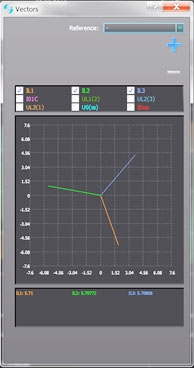
Having measured and tracked your energy usage it is time to make some adjustments. So far we have looked at simply reducing energy demand, but what about using energy more efficiently?
Amongst the many quantities measured by NPP915 power monitor relays is the power factor of your network. Equipment which draws a large amount of reactive power will adversely affect your power factor, and will ultimately lead to you drawing a higher current than necessary. Our newsletter from back in May 2018 noted how reactive power compensation can be used to keep your power factor within contracted limits and to lower your electricity consumption. If you are unsure what size or type of power factor compensation you need, why not commission a PTW study to model your network?
There may be some items on your network which operate continuously but which may be safely powered down during slack periods. Typically these will include process heaters or idling motors with very low loads. If your process includes many of these items, why not consider installing NPBC915 bay control relays? These relays can be used to initiate load-shedding during slack periods and may manage up to five circuit breakers or contactors to disconnect unnecessary loads or re-connect equipment when needed.
Amongst the many quantities measured by NPP915 power monitor relays is the power factor of your network. Equipment which draws a large amount of reactive power will adversely affect your power factor, and will ultimately lead to you drawing a higher current than necessary. Our newsletter from back in May 2018 noted how reactive power compensation can be used to keep your power factor within contracted limits and to lower your electricity consumption. If you are unsure what size or type of power factor compensation you need, why not commission a PTW study to model your network?
There may be some items on your network which operate continuously but which may be safely powered down during slack periods. Typically these will include process heaters or idling motors with very low loads. If your process includes many of these items, why not consider installing NPBC915 bay control relays? These relays can be used to initiate load-shedding during slack periods and may manage up to five circuit breakers or contactors to disconnect unnecessary loads or re-connect equipment when needed.
If you are seeking inspiration for how your business can save energy, there are some useful tools offered by the UK Carbon Trust
Climate of fear:
Amidst all of the advice and support to help businesses become more energy-efficient is a more fundamental drive for change within the UK energy industry as a whole. Put simply, businesses will still need some energy, particularly electrical energy, and that electricity must be generated in the most sustainable environmentally-friendly manner possible .

Laws and government policies are seen as important tools in driving change. In the UK this is a contentious issue since many environmental and energy regulations are derived from those of the European Union (EU). With the UK set to leave the EU in October 2019 (at the time of writing), there is real concern that there will be no effective environmental policies in the UK thereafter. The Broadway Initiative aims to ensure that the forthcoming Environment Bill includes provisions for promoting various environmentally-friendly activities in business and in the public sector. It is expected that the energy sector will be significantly affected by the outcomes of this bill. The Broadway Initiative proposals include not only statutory requirements for sustainable business practices but also that there should be a means of enforcing these practices.
It is therefore likely that businesses will soon have to improve their energy efficiency to comply.
It is therefore likely that businesses will soon have to improve their energy efficiency to comply.
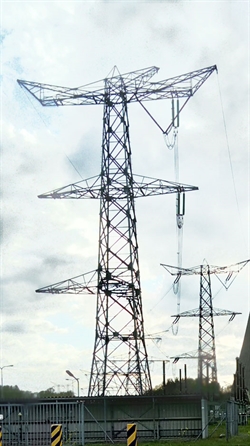
Not all drivers for energy efficiency are regulatory; some are contractual. The UK National Grid, the company which owns the UK’s electricity transmission infrastructure, encourages energy efficiency amongst its suppliers of substations and other assets. It does so by favouring any bids for construction work which have provably higher efficiency than competing bids.
Simply using energy at different times of day can also help to reduce the UK’s reliance on fossil fuels by maximising the use of wind and solar energy at the times when generating capability is at its peak (you guessed it – on windy and sunny days!). National Grid ESO (Electricity System Operator, an independent company in the UK which manages the electricity transmission system) has set up its “Power Responsive” initiative to encourage businesses to shed loads when generating capacity is low and reinstate them once more energy is available.
The ability to reduce electricity demand at short notice is a service for which National Grid will pay (the “Balancing Services: Reserve” scheme). Businesses with the ability to change their electricity demand within 30s of notification can also sell this service to National Grid ESO, since it is used as a mechanism to maintain the network frequency at 50Hz (the “Balancing Services: Frequency response” scheme). To benefit from one of these schemes, your company must have the right infrastructure in place to switch non-critical loads in and out of service. Consider the NPBC915 bay control relay to manage the contactors and circuit breakers feeding your major loads.
Simply using energy at different times of day can also help to reduce the UK’s reliance on fossil fuels by maximising the use of wind and solar energy at the times when generating capability is at its peak (you guessed it – on windy and sunny days!). National Grid ESO (Electricity System Operator, an independent company in the UK which manages the electricity transmission system) has set up its “Power Responsive” initiative to encourage businesses to shed loads when generating capacity is low and reinstate them once more energy is available.
The ability to reduce electricity demand at short notice is a service for which National Grid will pay (the “Balancing Services: Reserve” scheme). Businesses with the ability to change their electricity demand within 30s of notification can also sell this service to National Grid ESO, since it is used as a mechanism to maintain the network frequency at 50Hz (the “Balancing Services: Frequency response” scheme). To benefit from one of these schemes, your company must have the right infrastructure in place to switch non-critical loads in and out of service. Consider the NPBC915 bay control relay to manage the contactors and circuit breakers feeding your major loads.
Climate Changers:
Large, energy-intensive businesses may benefit from having their own dedicated Energy Manager; an employee who is trained to assess, quantify and ultimately reduce energy use throughout the organisation. The Energy Institute offers various tools, tips and training courses for would-be energy managers . Companies seeking to qualify for ISO 50001 accreditation or to meet their obligations under the ESOS scheme may find these resources useful.

Summary:
There are many ways your organisation can help to reduce the UK’s energy consumption and help it meet its decarbonisation targets. CEE Relays can offer products and services to help:
- NP900 relays can be used to measure energy consumption in real time.
- They can also monitor your power quality
- NPBC915 relays can switch loads out of service to reduce your company’s electricity demand
- PTW system studies can model your electricity network and help you to find efficiencies
- PTW studies can also be used to calculate what size of power factor correction equipment you might need